
When I was growing up, I wanted to be in just about every profession…
that I knew made a good amount of money.
I had already seen, from the age of 5, that to live a certain life, you had to make enough money. I saved all the gift money I received and though it was sometimes stolen or lost, I still felt that the most important thing about money was having it. After years of this relationship with money, I realized that having it didn’t actually get me more things I wanted. I had just been holding on to money for its potential. If I had money, I could buy something I wanted, but until I did, all I really had was paper.

People talk about teaching kids the “value” of money.” As a student, I worked hard, got into good colleges, and based most of my choices on my earning potential for the future. It seemed like education was a path to more money. Unfortunately, this is true, but not for the ability to make more money, more so for the ability to owe so much of it. I’m not an economist, so I won’t pretend to know how we got to this place where college is labelled as necessary, yet is so expensive, but I will ask a question (and will likely come back to that topic in another post):
Income or Impact?
We go to college or you send us to college, hoping we can make a life for ourselves. At some point though, we all feel faced with this question. We can use the gifts God gave us to change the world or we can use the gifts God gave us to try to take our place in the world. When we are in line with God’s will, these things can overlap. However when our ambition attempts to eclipse that of God, we end up fighting against and within a darkness of our own making. And in case you didn’t already know, our will won’t win.
This struggle wouldn’t have to be so profound except our society with currency that says “In God We Trust” must have at some point made the currency synonymous with God since that’s our goal more than God is. The professions that do God’s work tend to require more sacrifice financially. Charity is only legally beneficial for the purpose of keeping more of your money, hence why people will give to large causes that are tax-deductible yet avert their eyes from the homeless on the street. In this decision between income and impact, I can agree it is hard. We tend to measure our worth by a false ruler as though your salary is the worth of your work. The business men and women who monetize health, life, death, and religion, make significantly more than the teachers who see our children more than we do. So how do we get our priorities in order in a country that is so out of order?
Well first you pray about it.
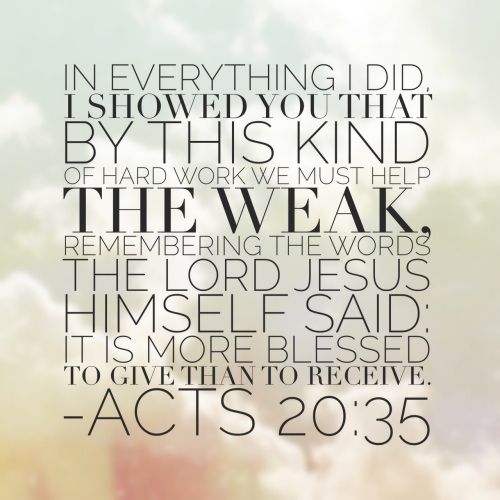
Then you realize that you don’t really have to choose. You just have to work a little harder to find that area where income and impact intersect. Doctors can make an income while making an impact (even thought they have a lot to pay back). Lawyers can make an income while making an impact. Whatever profession you choose, you can have your income and still make time for your impact. If your profession is your impact, you can make time for more income. Just remember that it is not the income itself that is important, it is what you use it for. The true value of money is not in its potential from your pocket, but its impact on your life through what experiences and assets you acquire and the lives of others through what you give. Therefore the true value of income is impact.
Thanks for reading!
KB

 Kireon